Showing posts with label Politics. Show all posts

Monday, June 7, 2010

The Aftermath of the Flotilla (comments by Anna Baltzer)

Anna Baltzer emailed her mailing list,  annas_peacework_palestine@yahoogroups.com :


The Aftermath of the Flotilla
 Last night marked one week since Israel's attack in international waters on the Mavi Marmara Turkish humanitarian ship bound for Gaza, killing nine. One by one, the hundreds of witnesses aboard the vessels have been returning home to tell their stories after being stripped of any and all footage. By confiscating all non-military evidence of the incident, Israel has been able to successfully dominate the narrative, at least in the US where news of the attack had begun to dwindle by the time witnesses were released. One wonders, if Israel is conveying the whole story of what happened that night, why eliminate every single other piece of documentation? What does Israel have to hide?
According to hundreds of eyewitnesses, the Navy shot at the boat and threw tear gas and sound bombs before boarding the ship, and then hit the ground shooting. The videos released by Israel show those aboard the ship attacking soldiers with sticks. Israel claims that the deaths were an accident, that the soldiers were startled by the sticks and thus forced to shoot people to defend themselves.
Now let's put things into perspective. In 2005, the Israeli Army removed 8,000 ideological settlers from Gaza, many of them kicking and screaming with sticks and rocks in hand. The Army managed not to kill or even shoot a single one of them. Do sticks from Turks hurt more, or is it not about the sticks at all?
As Dr. Norman Finkelstein pointed out, Israeli officials met for an entire week prior to the flotilla to plan precisely what they intended to do. The Israeli Ambassador to the US Michael Oren himself stated that the Mavi Marmara was simply "too large to stop with nonviolent means." It's hard to believe that this was an accident. 
While the world focuses on the flotilla and Gaza, Israel's restrictions on Palestinian rights in the rest of Palestine continue to tighten. On Friday, soldiers surrounded the Old City in Jerusalem to prevent Muslim men from praying at Al-Aqsa mosque. Only those younger than 15 or older than 40 were allowed through. Hundreds of men gathered outside the metal bars installed by the Army around the city gates. Frustrated, many men sat down to wait to pray on the sidewalk, but soldiers on horseback pushed through the crowd, forcing the men to scatter.
It's important to note that many Palestinians wait for years to receive a permit to visit Jerusalem for just one day. Sometimes the permits are valid only for a few hours. I saw a woman in Beit Sahour whom I'd met in Syracuse last Fall. She said it's easier for her to travel to New York than to go 10 miles away to Jerusalem. She said often permits are sent to the wrong village and families fall over themselves to get the permit to the right person in time, often failing. At the gates, some men argued with the soldiers, close to tears, not knowing if they would ever get another chance to realize a life-long dream of praying at their country's holiest site. 
Eventually, hundreds of men began to gather next to the wall of the Old City and across the street. If they could not enter, they would pray as close as they could. As the call to prayer rang out (at least sound can overcome walls), a noticeable calm came over the space as they bowed down in unison. The soldiers stood over the group, some filming with cameras. In the middle of the group were an olive tree and a young child who stood by himself, watching.
When the prayers ended, those who hadn't brought prayer mats wiped the dirt off their foreheads and gathered with others across the street where an imam had started to speak. Lara, a Palestinian delegate in our group translated bits and pieces of what he said.
The sermon was about the importance of compassion and justice in Islam. There they were, being denied their religious freedom, and they were talking about compassion. The imam asked that their prayers be accepted even though they could not be in the house of God. At one point, he raised his finger and called out the following: "Someday, we will live in a place where it doesn't matter what color your skin is, or where you're from." With every sentence the group resounded in a collective "Amen."
After the prayers, hundreds of women and older men poured out, one of whom told me he'd seen a man beaten by the Army for calling out against Israel's attacks on the flotilla. This is likely precisely what the Army wanted to avoid by keeping Muslims from congregating at the mosque, and they had been largely successful, at least so they thought.
Just as I was turning to return to the hotel, I heard a chorus of women's voices coming from inside the city walls. Soon a large group of women emerged carrying a Turkish flag and singing out familiar calls for justice and praising those who gave their lives to free Gaza. The soldiers thought that keeping the men out would be enough, but they had underestimated the women.
Israel has also underestimated the international civilian community, which continues to speak out. Day and night, we watch protests around the world unfold one after another, seemingly stronger and larger by the day: Japan, Paris, India, Oslo, Australia, and beyond. This is being called "Israel's Kent State."
Far more significant than protests is the fact that worldwide disapproval has been transforming into concrete rejection of normalization with Israel, including major victories for the Palestinian movement for boycott, divestment, and sanctions (BDS) on Israel until it complies with international law.
This past week, the student body at Evergreen College voted to divest from "Israel's illegal occupation." Before she was run over by Israeli soldiers in a US-made Caterpillar bulldozer in Gaza, Rachel Corrie had attended Evergreen. Along with divesting, students have voted for a "Caterpillar free" campus. You can support the students by clicking here.
A week before the flotilla, Italy's largest supermarkets COOP and Nordiconad announced a boycott of the Israeli produce company, Carmel Agrexco. Four days later, Deutsche Bank (Germany's largest bank, worth more than $1 trillion) announced divestment from Elbit Systems, an Israeli firm that supplies technology for Israel's military, settlements, and Wall (as well as the Wall between the US and Mexico). Deutsche Bank was one of the company's largest share-holders.
The next day, it was announced that Sweden's largest national pension funds were also divesting from Elbit. (Norway did the same more than one year ago.) Going a step further, the Swedish Port Workers Union announced last Wednesday that it would temporarily stop handling Israeli cargo in response to the attacks on the flotilla.
On the same day, Britain's largest union, Unite, passed a unanimous motion "to vigorously promote a policy of divestment from Israeli companies" and to boycott Israeli goods and services as in "the boycott of South African goods during the era of apartheid."
Then yesterday, the Pixies canceled their upcoming concert in Israel in response to Israel's attack on the flotilla. Musical artists Klaxons and Gorillaz canceled as well. This on the heels of cancelations by Santana, Gil Scott-Heron, Snoop Dog, Sting, and Elvis Costello.
These are but a few of the BDS victories that have happened just in the last month. The movement that officially began in 2005 crossed its first threshold in 2009 (having gained in four years the same momentum it took the BDS movement against South Africa 20 years to achieve), but 2010 has brought it to a new level.
Last month marked 62 years since 80% of the families in Gaza were displaced during Israel's creation, the Palestinian Nakba. And this week marks 43 years since Israel occupied the Gaza Strip and West Bank. The Occupation has been in place 70% of Israel's life-span so far. It is not temporary. And it is but one part of the problem. Along with Israel's discrimination against Palestinians within Israel's de-facto borders and outside historic Palestine, the Occupation will not be stopped voluntarily by Israel. As Dr. Martin Luther King, Jr. said: "Freedom is never voluntarily given by the oppressor; it must be demanded by the oppressed." I spoke with a member of Boycott from Within (Israelis supporting the Palestinian BDS Call) paraphrased a common phrase during the anti-Apartheid struggle in South Africa: We will bring them to their senses, or we will bring them to their knees. For Israel, as was the case for the South African Aparthe! id government, the former has simply never worked.

For photos, more reports, and info on Anna's book, DVD, and upcoming speaking tours, visit www.AnnaInTheMiddleEast.com

Thursday, February 18, 2010

It's worth reading to the end of Joseph Stack's suicide note


In It Can Happen Here: America On the Brink, self-proclaimed patriot, ardent capitalist and business school professor Bruce Judson (see his blog) begs all who will listen or read his book that the U.S. must rectify the last 30 years of income inequality or face the prospect of riots in the streets, political instability, terrorist acts from disenfranchised and impoverished Americans with nothing left to lose, and the end of America as we know it (see buzzflash book review here ).
Judson says we need universal health care and aggressive social works program (similar to the 1940's New Deal) in order to head off unrest.  Hm.  Bring on the unrest!  But do we have boots in the street yet?  Do we have desperate people with nothing left to lose committing acts of violence?

Well, as of today, we at least have flying your plane into an IRS building.

The media are generally spinning Joe Stack's suicide note as insane ramblings.  It's worth reading and making up your own mind,  here.  But if you don't have the time or inclination, at least check out his final two sentences:

The communist creed: From each according to his ability, to each according to his need.
The capitalist creed: From each according to his gullibility, to each according to his greed

Not very rambling.  Pretty sane.

Thursday, December 31, 2009

The summer of my medical tourism, Part III

There's a big topic looming for this blog.  "Is going overseas for egg donation -- some could call it fertility tourism -- something leftists do?"  
 
I've put off this topic for months now, given that H and I returned from Cyprus, pregnant, in late August 2009.  
 
I've felt compelled, all this time, to address this topic because this blog isn't just "All About Moi" or "Procrastination for writing a journal article" or  "My Pregnancy Journal" or "Yet another psychology professor's blog."  I choose the quirky name "I married a communist" for some kind of purpose, so from time to time there should be something about how being associated with the political far left influences one's daily life or at least internal monologues.  
 
H already had this discussion with one of his communist friends, a sometimes reader of this blog.  I hear they mused about the topic but didn't come to a conclusion.   
 
But I've come to some tentative conclusions, after conversations with friends, on two topics:  Is it okay to be the wealthy foreigner throwing money around in a less-developed country?  Did I exploit a woman from an under-developed country by purchasing a part of her body?  
 
Is it okay to be the wealthy foreigner? Yes: I have a choice where to spend my money -- why not spend it in a developing country?  
 
In the world I want to live in, disparities in wealth would be sufficiently small that there would be no economic motivation for anyone to build a hospital in poor country X with the hope of bringing in overseas clients from wealthy country Y.   Am I acting to continue global wealth inequalities by participating in fertility tourism?  I'd enjoy hearing comments from globalization experts, but here's what I've gleaned from some diverse readings:  Many experts are saying we need less *aid* and more *trade.*  When wealthy countries directly give money/resources to poor countries, it breeds corruption.  'Free' money incites competition to confiscate the give-away.    
 
Regular tourism isn't an ideal wealth-creating  industry because it can sequester locals in dead-end jobs of being maids and gardeners.  Medical tourism is hard work.  Yes, there may be a rich capitalist in Turkey who is making extra money off of his investment in Istanbul's Jinemed hospital, but Jinemed doesn't just serve rich tourists -- it's a vibrant city clinic.  Medical tourism has the advantage of training locals for the whole necessary panoply of medical professionals, doctors, nurses, technicians etc.   The prenatal/fertility clinic in Cyprus that  did my invitro sees several infertile foreign couples per day, but still most of their work is with Cyprus locals.  The day of my embryo transfer we waited while a dozen or more Cypriots gathered to attend/celebrate a birth, as my doctor was also their obstetrician.  So locals benefit from the presence of the expertise that was partially funded by the wealthy tourists.  
 
The feminist angle: Poor women's bodies have always been exploited -- by man and by wealthier women.   Did my action of buying a woman's eggs contribute to that?  
 
There are certainly some delicate issues here.  
 
In the realm of buying a piece of someone's body, egg donation seems to me to be on the more benign side, for the following reasons:  
 
Because women produce about 400 eggs in a life-time,  I bought a replaceable piece of a woman's body.  Not as benign as purchasing blood, but no where near as drastic or life-influencing as buying a kidney.  
 
Side-effects are rare (between 1 in 500 and 1 in 1,000), but span the spectrum from an easily-cured infection to infertility.  Because of the rare chance of an extreme negative outcome like infertility, in Cyprus, women are encouraged to be egg donors only if they have already had all of the children they want.  I was told my donor was married, 25 and already had the 3 children she desired (3 children is the average for Turkey/Cyprus).    
 
One reason I choose Turkey/Cyprus as the place for egg donation was that I had read some exploitative stories about Eastern Europe, where young women are drawn in from the country side to the supposedly glamourous, fast-paced cities, housed in dormitories, given little compensation, treated like egg-donation machines, and thrown aside when they had a negative outcome. In contrast, Cyprus is a small island that doesn't leave room for the phenomena of women leaving rural areas to go to the big city where bereft of family support they can be exploited by ruthless organ middle-men.    (But see this story about eggs of Eastern European women being sent to Cyprus.) 
 
An angle I know less about is the Islamic side.  Under Islam, egg and sperm donation are not permitted, being t is tantamount to adultery. For historical reasons including influence from Greece, Cyprus has never been as Islamic as Turkey (it takes work and locomotion to hear a call to prayer).  Still, because the citizenry is Islamic, egg donation is not something to openly discuss.  Women do it privately.   In order to continue to be allowed to legally provide egg/sperm donation,  the clinics have to be careful to avoid scandals,  and thus need to be scrupulous about medical care and treatment of their egg donors.  
 
Finally, the communist/internalist perspective.  Classically, communists are opposed to nation states  (the communist anthem is the "International").   Even in a utopian, egalitarian society, there will be infertile women who want the chance to become pregnant via egg donation, and there will be fertile women who don't mind being a donor, either for some extra cash or for just for the secret joy that they gave an infertile woman the gift of pregnancy.    
 

I think often of the "Cypriot Beauty."  Did my clinic (a Cyprus clinic, not run by overseas organizations) tell her that implantation worked, in my case? Will she wonder about the twin boys that are her genetic offspring, growing up half-way around the world?  I imagine that in the future we'll visit Cyprus as a family, and my sons may feel their Eastern Mediterranean roots.   Comrade, thank you.

Wednesday, December 2, 2009

Obama, controlled by aliens...

Like many ever hopeful reformists , last January I liked Obama.

But during his televised address about sending 30,000 troops to Afghanistan last night,  I had the sinking impression that he was being controlled by aliens.

What a capitalist tool, I thought, in horror.

I'll use this space to let a better writer, and more politically expert commentator, put my feelings into words.


December 1, 2009 The Obama Puppet -- The world's least powerful man
opednews.com    Paul Craig Roberts 
[Paul Craig Roberts, a former Assistant Secretary of the US Treasury and former associate editor of the Wall Street Journal]


It didn't take the Israel Lobby very long to bring President Obama to heel regarding his prohibition against further illegal Israeli settlements on occupied Palestinian land. Obama discovered that a mere American president is powerless when confronted by the Israel Lobby and that the United States simply is not allowed a Middle East policy separate from Israel's.


Obama also found out that he cannot change anything else either, if he ever intended to do so. The military/security lobby has war and a domestic police state on its agenda, and a mere American president can't do anything about it.


President Obama can order the Guantanamo torture chamber closed and kidnapping and rendition and torture to be halted, but no one carries out the order. 


Essentially, Obama is irrelevant.


President Obama can promise that he is going to bring the troops home, and the military lobby says, “No, you are going to send them to Afghanistan, and in the meantime start a war in Pakistan and maneuver Iran into a position that will provide an excuse for a war there, too. Wars are too profitable for us to let you stop them.” And the mere president has to say, “Yes, Sir!”


Obama can promise health care to 50 million uninsured Americans, but he can't override the veto of the war lobby and the insurance lobby. The war lobby says its war profits are more important than health care and that the country can't afford both the “war on terror” and “socialized medicine.”


The insurance lobby says health care has to be provided by private health insurance; otherwise, we can't afford it. 


The war and insurance lobbies rattled their campaign contribution pocketbooks and quickly convinced Congress and the White House that the real purpose of the health care bill is to save money by cutting Medicare and Medicaid benefits, thereby “getting entitlements under control.”


Entitlements is a right-wing word used to cast aspersion on the few things that the government did, in the distant past, for citizens. Social Security and Medicare, for example, are denigrated as “entitlements.” The right-wing goes on endlessly about Social Security and Medicare as if they were welfare give-aways to shiftless people who refuse to look after themselves, whereas in actual fact citizens are vastly overcharged for the meager benefits with a 15% tax on their wages and salaries.


Indeed, for decades now the federal government has been funding its wars and military budgets with the surplus revenues collected by the Social Security tax on labor.


To claim, as the right-wing does, that we can't afford the only thing in the entire budget that has consistently produced a revenue surplus indicates that the real agenda is to drive the mere citizen into the ground.


The real entitlements are never mentioned. The “defense” budget is an entitlement for the military/security complex about which President Eisenhower warned us 50 years ago. A person has to be crazy to believe that the United States, “the world's only superpower,” protected by oceans on its East and West and by puppet states on its North and South, needs a “defense” budget larger than the military spending of the rest of the world combined.


The military budget is nothing but an entitlement for the military/security complex. To hide this fact, the entitlement is disguised as protection against “enemies” and passed through the Pentagon. 


I say cut out the middleman and simply allocate a percentage of the federal budget to the military/security complex. This way we won't have to concoct reasons for invading other countries and go to war in order for the military/security complex to get its entitlement. It would be a lot cheaper just to give them the money outright, and it would save a lot of lives and grief at home and abroad.


The US invasion of Iraq had nothing whatsoever to do with American national interests. It had to do with armaments profits and with eliminating an obstacle to Israeli territorial expansion. The cost of the war, aside from the $3 trillion, was over 4,000 dead Americans, over 30,000 wounded and maimed Americans, tens of thousands of broken American marriages and lost careers, one million dead Iraqis, four million displaced Iraqis, and a destroyed country.


All of this was done for the profits of the military/security complex and to make paranoid Israel, armed with 200 nuclear weapons, feel “secure.”


My proposal would make the military/security complex even more wealthy as the companies would get the money without having to produce the weapons. Instead, all the money could go for multi-million dollar bonuses and dividend payouts to shareholders. No one, at home or abroad, would have to be killed, and the taxpayer would be better off.


No American national interest is served by the war in Afghanistan. As the former UK Ambassador Craig Murray disclosed, the purpose of the war is to protect Unocal's interest in the Trans-Afghanistan pipeline. The cost of the war is many times greater than Unocal's investment in the pipeline. The obvious solution is to buy out Unocal and give the pipeline to the Afghans as partial compensation for the destruction we have inflicted on that country and its population, and bring the troops home.


The reason my sensible solutions cannot be effected is that the lobbies think that their entitlements would not survive if they were made obvious. They think that if the American people knew that the wars were being fought to enrich the armaments and oil industries, the people would put a halt to the wars.


In actual fact, the American people have no say about what “their” government does. Polls of the public show that half or more of the American people do not support the wars in Iraq or Afghanistan and do not support President Obama's escalation of the war in Afghanistan. Yet, the occupations and wars continue. According to General Stanley McChrystal, the additional 40,000 troops are enough to stalemate the war, that is, to keep in going forever, the ideal situation for the armaments lobby.


The people want health care, but the government does not listen.


The people want jobs, but Wall Street wants higher priced stocks and forces American firms to offshore the jobs to countries where labor is cheaper.


The American people have no effect on anything. They can affect nothing. They have become irrelevant like Obama. And they will remain irrelevant as long as organized interest groups can purchase the US government. 


The inability of the American democracy to produce any results that the voters want is a demonstrated fact. The total unresponsiveness of government to the people is conservatism's contribution to American democracy. Some years ago there was an effort to put government back into the hands of the people by constraining the ability of organized interest groups to pour enormous amounts of money into political campaigns and, thus, obligate the elected official to those whose money elected him. Conservatives said that any restraints would be a violation of the First Amendment's guarantee of free speech. 


The same “protectors” of “free speech” had no objection to the Israel Lobby's passage of the “hate speech” bill, which has criminalized criticism of Israel's genocidal treatment of the Palestinians and continuing theft of their lands.


In less than one year, President Obama has betrayed all of his supporters and broken all of his promises. He is the total captive of the oligarchy of the ruling interest groups.Unless he is saved by an orchestrated 9/11-type event, Obama is a one-term president.Indeed, the collapsing economy will doom him regardless of a “terrorist event.”


The Republicans are grooming Palin. Our first female president, following our first black president, will complete the transition to an American police state by arresting critics and protesters of Washington's immoral foreign and domestic policies, and she will complete the destruction of America's reputation abroad. 


Russia's Putin has already compared the US to Nazi Germany, and the Chinese premier has likened the US to an irresponsible, profligate debtor. 


Increasingly the rest of the world sees the US as the sole source of all of its problems. Germany has lost the chief of its armed forces and its defense minister, because the US convinced or pressured, by hook or crook, the German government to violate its Constitution and to send troops to fight for Unocal's interest in Afghanistan. The Germans had pretended that their troops were not really fighting, but were were engaged in a “peace-keeping operation.” This more or less worked until the Germans called in an air strike that murdered 100 women and children lined up for a fuel allotment. 


The British are investigating their leading criminal, former prime minister Tony Blair, and his deception of his own cabinet in order to do Bush's bidding and provide some cover for Bush's illegal invasion of Iraq. The UK investigators have been denied the ability to bring criminal charges, but the issue of war based entirely on orchestrated deception and lies is getting a hearing. It will reverberate throughout the world, and the world will note that there is no corresponding investigation in the US, the country that originated the False War.


Meanwhile, the US investment banks, which have wrecked the financial stability of many governments, including that of the US, continue to control, as they have done since the Clinton administration, US economic and financial policy. The world has suffered terribly from the Wall Street gangsters, and now looks upon America with a
critical eye. 


The United States no longer commands the respect it enjoyed under President Ronald Reagan or President George Herbert Walker Bush. World polls show that the US and its puppet master are regarded as the two greatest threats to peace. Washington and Israel outrank on the most dangerous list the crazy regime in North Korea. 


The world is beginning to see America as a country that needs to go away. When the dollar is over-inflated by a Washington unable to pay its bills, will the world be motivated by greed and try to save us in order to save its investments, or will it say, thank God, good riddance.


Friday, October 30, 2009

The Hyatt Regency Cambridge.... A really beautiful hotel...

I've loved the view of you across the river from where I work. You're lovely. But not lovable.

Dear Hyatt Regency Cambridge,

In the past, my University, Boston University, has used the Hyatt Hotel for the year-end party for the psychology dept, for several years in a row. I'm hoping BU will join Governor Patrick in boycotting the Hyatt over its firing of housekeepers when they protested working conditions.

I have written Boston University to ask them to join the boycott.


Background for readers:

start with:

WBUR story

or

Hotel workers' website

And when you're driving down Memorial Drive, give a honk and thumbs up to the women now jobless after 20 years.

Their replacements are being paid minimum wage. I guess they thought these deserved more than that.

What's the solution? Pay more for hotel rooms so that workers can earn a living wage? Or: what if hotels didn't have to make a profit? Imagine.

Wednesday, September 23, 2009

Are young people today angry about being handed a despoiled planet?


According to "Power Shift O9" they are, as in this quote from Power Shift:

Thousands of young people will rally across the United States this Fall for the Power Shift '09 Regional Summits: 11 massive gatherings to exercise the political power of young voters and ask President Obama and Congress to pass a clean energy jobs plan by December to rebuild our economy, end our dependence on dirty energy, and bring America lasting security.

It's a wonderful image...

Tuesday, August 11, 2009

Bill Maher gets it right


"… over the last 30-odd years, the Democrats have moved to the right, and the right has moved into a mental hospital. So what we have is one perfectly good party for hedge-fund managers, credit-card companies, banks, defence contractors, big agriculture and the pharmaceutical lobby - that’s the Democrats. And they sit across the aisle from a small group of religious lunatics, flat earthers and Civil War re-enactors … who actually worry that Obama is a socialist. Socialist! He’s not even a liberal! ... Democrats are the new Republicans” (Real time with Bill Maher June 19).

Yeah, if only. If only Obama all along had been a closet socialist and when he won election in November 2009, stripped off capitalist lackey covering and showed his true colors, to govern for 4 years implementing a program of reform the likes of which this country hasn't seen since, say, the Nixon era.

Its amusing... how did socialism get to be a bad word? I understand how communism became loaded with negative imagery because of 1950s-70s cold war rhetoric, and because of the authoritarian policies of the governments in Eastern Europe; but socialist? The socialists made Europe the relatively benign place to live that it is today (see this book).

Friday, July 3, 2009

No taxation without representation

In June 1992, as a young psychology professor, I participated in a home-stay in the Palestinian Town of Beit Sahour, along with American undergraduates from Occidental College.

I chatted at length with a local psychology professor who was studying teens' construction of sexuality. I read his technical reports and saw that Palestinian teens' knowledge was reminiscent of a 1970s America. The intro psych textbook used at Beit Sahour university was an Arabic translation of the classic American text by Atkinson and Hilgard's Introduction to Psychology. The textbook I saw seemed a home-made job, with printed Arabic, but the pictures had been pasted in without captions translated. I wondered if this literal translation of an American text was the best way to teach psychology. Wouldn't one want to construct a book grounded in themes and examples from Arab or Palestinian society?

We Americans stayed in the homes of the town's Christian Palestinian middle class. We spent hours talking with members of the families; our students did clean-up project with teens from a high school. The kitchens had modern appliances; "my" family was eager to show me the video of their eldest daughters' wedding. I walked the dusty streets, gazing at the beautiful countryside. This wouldn't be a bad life, I thought to myself.

But once you start talking about business and livelihoods, other perspectives appear. The father of "my" family took me to his shop. He ran a building/construction store, kind of home-depot packed into one storefront room. Tools, building materials filled every available space. Somehow we began talking about the tax revolt of 1986. Because my parents were Palestinian activists, I'd heard of this years before as a college student, but it was good to hear of it from someone who participated.

"You know we pay taxes to the Israelis" -- four syllables, "Iss-rah-eee-lees" -- pronounced as quickly as one. "We pay for our own occupation. So we said No." And I remember what my parents had said: a letter sent to every American senator and congressman declaring a refusal to pay taxes to an illegal occupation. How could taxes be levied on a people who had no rights of citizenship, no right to even build a home? And not a mention of the revolt in the American press. All those carefully mailed letters sunk without a sound.

"So what happened when you all refused to pay taxes? What did the Israelis do?"

"They came and took everything, it was an empty room." And he flung out his arms to encompass the room and conjure up images of bear metal shelves and a cracked dusty concrete floor.

With his lip curled and his angry face, it seemed that even 6 years later he keenly felt the pain of that lost merchandise, of rebuilding back his stores of building supplies while still paying taxes to the occupiers.

I wish non-violent resistance would work. I wish that every suicide bomber would imitate the Buddhist monks who protested the Viet Nam war, and just light himself on fire (or detonate his bomb) in an empty city square or farmer's field, rather than cause others' deaths along with his own on a crowded bus. But I'm not the one who had my store stripped or my father imprisoned or my sister forced to give birth at a checkpoint en route to the hospital. My house and my kids' school haven't been bulldozed. My students don't have to read hasty translations of another country's psychology textbooks.

I've been getting a lot of email about a "new" move to boycott Israeli products. But hasn't the idea of disinvestment been around for a long time? And it hasn't worked. But if something different is happening now -- if there can finally be nonviolent resistance, praise be to the Universe.

I found the statement by Radhika Sainath, of The Electronic Intifada, arguing for a boycott, particularly powerful.

Thursday, June 4, 2009

Today Obama characterized end of American slavery as occurring thru non-violent means


What about John Brown, famous abolitionist, freedom-fighter and terrorist? What about the Civil War?

Modern Day Slavery


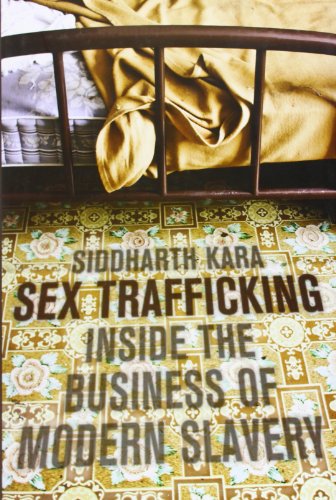
A lot more needs to be done to stop sexual slavery of children and adult women. The following spam showed up in my inbox today; The people said to be '14-20' years are coerced. Abduction, forced labor and rape are against the law. How to end human trafficking should be one of the biggest topics of the modern day. See the blog at change.org for more info. Can't a sting operation be planned, given that the slave owners promise to deliver slaves "at YOUR REGION" -- or maybe the Russian mafia is just too scary.

===
Hello user, are you horny already? Then check out all the horrors of children porn! Look virgin vaginas ripped apart by black monster cocks at: http://mootube.ru/. Real virginity loss with blood inside.

Tired of jerking and want to get laid? Carlobucks.ru will deliver you any pleasures you want! 14-20 years bitches, waiting for your dick, register and meet them at YOUR REGION. Our young whores will do anything you wish, only sign up http://vsekrete.com/. It's not cheap, but we guarantee, you will get your pleasure!
===

Sunday, April 19, 2009

Should we expect more workplace shootings in today's economy?


One of the bloggers I frequently read (indeed, her blog is my home page -- great mix of psychological insight, wit and lighter fare) will be speaking on the Today Show about the important topic of "layoff etiquette." This involves things like:

What etiquette dilemmas do the unemployed and their still-employed friends face? What awkward situations have you encountered because of a friend's unemployment, or your own?

Discussion of the 10,000 laid-off per day are big in my household write (oops) now because H .... no he wasn't laid off or even threatened with such (H doesn't work outside the home) is writing a play which is set in 'The Present" against the back-drop of the current economic crisis. The play features a workplace shooting (or at least the threat of one, final act not completed yet).

So my brain has been spinning the etiquette question a couple different ways.

What should one do if a friend who lost their job confesses that they are so tired of the unfairness of our current economic system that they want to go postal -- the bosses need to pay too, etc, like the old rhyme from the rank and file in Vietnam, "Turn the guns around, shot the bosses down"... Advise them to work for change in a nonviolent manner? Why shoot yourself in the foot (head) just to have the satisfaction of killing your boss first?

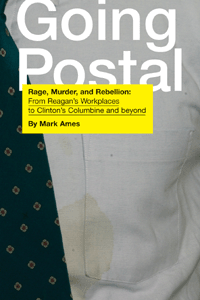
There is a provocative book that says that workplace shootings are a way that frustrated workers vent their anger at an unjust social system,

from wikipedia:

Going Postal: Rage, Murder, and Rebellion: From Reagan's Workplaces to Clinton's Columbine and Beyond is the title of a book by Mark Ames, which examines the rise of office and school shootings in the wake of the Reagan Revolution, and compares the shootings to slave rebellions....Ames argues that "killing sprees" at U.S. workplace and schools are acts of political insurgency rather than ordinary crimes or the actions of disturbed individuals.

Indeed, Mark Ames also wrote a story on this last month: "Workplace Massacre in Alabama: Did Endless Downsizing and Slashed Benefits Cause the Rampage?"

Ames writes: "But of all the inexplicable circumstances surrounding the murder spree, one of the oddest has to be the way Alabama authorities went from focusing hard on solving the shooter's motive to suddenly dropping the issue like a hot potato and running away from the scene of the crime, as if they didn't like what their investigation produced..."

Thursday, April 2, 2009

Anger at management bubbling over -- Scenes from Goddard's Tout Va Bien


Some of you movie connoisseurs may know about  "Tout Va Bien," also known as "All Is Well." This is Jean-Luc Goddard's fictional account of the labor disputes and strikes by French workers in 1968.

The real-life version updated to 2009 is now appearing in towns across France...

Caterpillar bosses held hostage
Lizzy Davies in Paris
April 2, 2009
FRENCH bosses were given a fresh reminder of the dangers facing them during the economic downturn this week as angry factory workers in Grenoble barricaded their offices and took four managers hostage.

Protesting against job losses and meagre redundancy payouts, local employees of the US firm Caterpillar decided to take matters into their own hands and locked their superiors inside the plant's management headquarters.

The latest in a surge of "bossnappings" across the country, the incident aimed to bring a more satisfactory conclusion to the recently announced round of blood-letting in which more than 700 workers are to be laid off.

"We are holding them in the director's office," Benoit Nicolas, a union official, said during the stunt, or sequestration, as it is known in France. The hostages included Nicolas Polutnick, the factory director, the head of human resources, and the head of personnel. "They are a little shocked," Mr Nicolas said.

The bossnapping was a clear sign of France's reawakening industrial restlessness amid the financial crisis.

Far from a one-off, the Caterpillar crisis was the third since last month. Last week the head of a factory run by the US chemicals giant 3M was held for 24 hours in a meeting room.

The chief executive of Sony France, Serge Foucher, had to spend the night in a conference room as workers blocked exits with tree trunks, demanding improved redundancy packages.

Bossnapping is regarded as the ace card played by a workforce at the end of its tether.

Sunday, March 29, 2009

Obama did something right -- may be serious about fighting slavery


Its been disappointing to hear that Obama is continuing the Bush administration's war plans, although they retired the phrase "War on Terror."    This raises the fear that there was no change to believe in.

But good news came in recently from Change.org.  Change.org combines social networking (complete with friend requests) with social activism of the typical liberal kind, for which I am a softie (even though my communist husband says they make things worse by supporting the current regime, ok....).  Anti-human-trafficking blogger Amanda Kloer, who works full time as an abolitionist, writes:   

This week President Obama nominated long-time, tenacious human trafficking prosecutor Lou de Baca to lead the State Department's Office to Monitor and Combat Trafficking in Persons, a position sometimes called "America's Anti-Slavery Czar"..... de Baca's background is heavily focused on labor trafficking... I am thrilled that President Obama chose de Baca, demonstrating a strong commitment to making that office serious about fighting trafficking. He is an amazing prosecutor, a dedicated anti-trafficking professional..

I just taught a class on international sex trafficking to my developmental psychology class and may post more here shortly.  What are your questions?

Tuesday, March 17, 2009

Communism: a viable alternative?

As the epoch of liberal capitalism and the free market falls apart, the question of an alternative must be re-opened
by Bernard Keenan

Let's get one thing out of the way to begin with: history is back in fashion. A generation on from Francis Fukuyama's claim that the fall of the Soviet Union marked the "end of history", the epoch of liberal capitalism and the free market fell apart in spectacular style during a few short months last autumn. As jobs disappear and anger rises, the bare bones of ideology that prop up the present system are exposed.

The speedy panic with which our governments agreed to throw billions of pounds away to restore "confidence" suggests that the dream is over and we are awakening to a strange new socialism, in which an increasingly authoritarian government has taken public control of financial capitalism in order to save it from itself. We read today that equal pay reviews no longer matter. Migrants are left to starve on the streets as the government heads off the far right by pandering to it. And so it's precisely now that the question of an alternative must be re-opened.

Against this backdrop, Birkbeck College this weekend hosted a symposium on the idea of communism. Originally planned as a meeting of philosophers and those who enjoy hearing their debates, the unexpected material circumstances of history instead gave the event a genuine sense of urgency. Even the BBC came to hear Slavoj Zizek, Alain Badiou, Jacques Ranciere, Michael Hardt, Toni Negri, and others speaking on the possibilities and challenges of reinventing the communist ideal today.

The conference was happily free of dogmatism. No one on the stage was there to represent a particular party or doctrine. There were disagreements, but at heart was a simple proposition. Communism is an idea that has been with us in different forms for thousands of years, as Terry Eagleton pointed out. The task is now to think what the concepts of egalitarian voluntarism, self-organisation, common ownership of common means of production, abolition of class-structured society, and freedom from state power can mean today.

It's a bold statement, declaring oneself a communist. The cultural revolutions of 1968 were the beginning of the end of the party-state, when programmatic communism was replaced by a more postmodern, abstract idea of "the left". Freedom of thought and nomadic thought undid the old certainties of Marxist political knowledge. No one has quite figured out how to replace them, and this perhaps more than anything else can account for the current weakness of the left, even as capitalism is in crisis: what is to be done?

First, the question of the role of the state and the economy remains open. While Judith Balso, Toni Negri and Alain Badiou insist on creating new political movements at a distance from the state, Zizek and Bruno Bosteels point to the experiences of Bolivia and Venezuela as contemporary proof that by taking power, a progressive radical movement can survive even against overwhelming reactionary forces. For Zizek, to reject the idea of a revolutionary state in the absence of a clear alternative is a cop-out.

However, such considerations all seem to beg the question of how to organise. It is difficult to imagine a new Communist party, but without one, the idea of communism remains just that: a quasi-religious article of faith. This was perhaps Eagleton's point when he observed that it is not so difficult to imagine a communism of scarcity, foisted upon us by disaster rather than rapture.

Perhaps the true question is: why communism? It does no harm to remember that for Marx, communism was not something anachronistic and programmatic. Marx insisted on the simple idea that we and no one else are responsible for remaking the world. Communism can only be enacted from what really exists. The party-states attempted to bend society to match some abstract idea. A true philosophy of communism cannot provide all the answers, because it has not yet encountered the problems.

Separating the promise of communism from the disasters of the 20th century is no easy task. But it feels necessary. Already we know that choices will have to be made and sides taken. Impending ecological disaster suggests that this could be our last chance to do so. If another world is possible, it will happen in action, not abstract theory. The first choice is very simple: to begin.

Letter from China; movie "Obama Deception"?

On one of my last evenings in China during my sabbatical in Spring 2008, I was collecting data on emotional expressions by sitting outside a small classroom as my participants filled out a survey (all in Mandarin; thank you my dear English major assistants), and on completion they gave me a shy thank you or tried out some English, and I handed over a 10 yuan note -- except one student stayed and sat on plastic chairs with me and talked for the remaining hours as my participants came and went. We later went to a restaurant and he helped me order and we talked for 2 more hours and 2 days later I was on a plane for Hong Kong...

Hi, Prof.
How are you going these days? Sorry for that long time we have not touch since I was always immersed in routines that I confronted. During the past half year, I fortunately involved in Olympic Games in Beijing 2008 and enjoyed nearly 2 month over there. Also, I as exempted into the Hong Kong Model United Nations 2009 in HK this year. All of the above I mentioned extremely enlarged my view of point on global business and borden my perspective of international politics. Here I have some experience to share with. Wish it would not bring extra burdens for your busy teaching calendar.

Congratulations for the world hero Barack Obama inaugurated as the US president this year. As most of friends, I was excited for the victory of democracy and free humanity. However, at the same time, I still remember the point you taught me that the corruptness really exists in great American. Your assertion, frankly speaking, shocked me and even influenced my sense of worth positively. Never had I expected the US---the dream land of freedom and equality in the world---has such a big problem in recent years.

After that moment, I had the desire to explore the truth. I talk to my foreign tutor in my university, who is also a good friend of mine, how you feel about China and why you leave your homeland at the age of 60. Unexpectly, he response with a negative voice that US is not a perfect place and he can felt the vigor emerging in China. Similarly, I felt the regret from the bottom of his heart and that impulse my curiosity toward the deeper research in the different and similarity between China and the US.

Under his guidance, I read some books and watched some movies. They are fantastic and you may never know how excited I am right now because I seem to find out something unbelievable and want to share my excitement with you. Money Master, a firm made for recovering the history of American real history that several American President were assassinated for their efforts to be against banking system. OBAMA DECEPTION, wrote by Webster Tarpley and directed by Alex Jones, also a film made recently and I just watched, reveal the secrets behind the executive operation in the US and how the Non-government organizations and off-shore banks control the policy maker. The film advocates the world citizens to stop the establishment of global rules and refuse the dictatorship. This assertion makes people upset, but maybe real. I wonder did you focus on these films and have the same feeling.

In this film, the author quotes what President Thomas Jefferson wrote to the secretary of the Treasury Albert Gallatin (1802), that “I believe that banking institutions are more dangerous to our liberties than standing armies. If the American people ever allow private banks to control the issue of their currency, first by inflation, then by deflation, the banks and corporations that will grow up around [the band] will deprive the people of all property until their children wake-up homeless on the continent their fathers conquered. The issuing power should be taken from the banks and restored to the people, to whom it properly belongs.” I hope it will never appear in US.

Here is my newly assumption. I consider you may be interested in this field and glad to share my points with you. Sincerely wish it would be disturbing. And you do not need to response if you were so busy over there.

Best regards


Readers --Have any of you seen these movies? Advice, comments?

P.S. When I spoke with this student, I talked about the US as a kleptocracy, especially the Bush administration, but I did not mean to convey that kleptocrats only came to power in "recent years."

Monday, February 16, 2009

Iraq War Ends -- revisiting the "July 4 2009" New York Times Spoof


If you didn't hear about the spoof of the New York Times back in November 2008 (surely there was a lot going on), its worth taking a look, and reading about the press coverage of the goals of the "pranksters" who put it together.

Now, United for Peace and Justice has teamed up with The Yes Men, who spent 6 months to make the 14-page NYT hoax.

They're selling the remaining copies for $50, as a way to raise money for United For Peace and Justice. Call the UFPJ to order a copy.

Saturday, February 14, 2009

"I really do not understand what socialism entirely."


Excerpt from Rate Your Students:

I teach the U.S. history survey, and my students are reading Howard Zinn as one of their texts. They were asked the following question as part of their homework on a Zinn reading:

"Why were workers attracted to socialism? Why did businessmen find it threatening? What did it threaten?"

I got this response: "I really do not understand what socialism entirely. The word seems to be thrown around in literature and politics that I really cannot grasp what it's supposed to mean. So to save myself the agony of doing hours of reading, I'm not going to answer this question. Sorry."


The proffie then reacts in shock along the lines of what are students coming to these days and you can read about that on RYS.

I wonder if that there is something about how socialism is mentioned in the contemporary media (what the student refers to as literature and politics) that created a reaction in this student that is different than if, say, the homework had been about some other political movement: neoliberalism, environmentalism, global warming, intelligent design, etc.

H thought yes: "Socialism is a swear word."

Or: the S word is mentioned rarely, and when it is mentioned, not explained or discussed in a way that the concept can be grasped from context.

Saturday, January 31, 2009

I really like Obama, but then, I'm a craven reformist...

Recent conversation between husband and wife, chez nous:

Me: And then Obama said (I paraphrase), "It doesn't matter whether government is big or small, what matters is if government works!" Wow! And he excoriated those CEOs who make those 40 million a year salaries! He lay into them! I've been complaining about that for years.

H: Yeah, He's telling the CEOs: Stop fucking it up for the rest of us.

Me: The rest of us?

H: The rest of the ruling class! Obama is telling the CEOs, You're being stupid. You're showing too much bling!

Me: Aww... you mean, the CEOs, in their ostentation, are showing the kind of utter disregard for the underclass, the kind of contempt, that would galvanize the oppressed to revolt? Or just such lack of awareness? Marie Antoinette unwittingly put her name on the list for the guillotine when she showed such immense misunderstanding of the class structure of her society, when she told the working poor of Paris that if they didn't have enough bread, they should eat cake.


H: (felt my comparison glossed over too many distinctions and tactfully ignored it) "The problem in America today isn't how much the ruling class pay each other every year, $40 million vs $4 million vs $1 million -- the problem is that they exist."

Me: You mean, Obama is helping, helping mightily, he'll ease some misery at the bottom, he'll let the current rule continue.

H: That's why the ruling class let him become president. He knows his job. If he's good at it, all the better for them.

Wednesday, January 28, 2009

Karl Marx makes cover of TIME magazine


But only on the overseas edition -- not fit for domestic consumption?

In fact, only the European edition -- the covers for the U.S., Asia and South Pacific featured the Obama oath of office http://www.time.com/time/magazine/europe/

The story Europeans want to read (or get to read) is (excerpt):

Rethinking Marx
By PETER GUMBEL

As we work out how to save capitalism, it's worth studying the system's greatest critic.

From Washington to Vladivostok, the task of warding off financial collapse and economic depression is now the overwhelming priority for government leaders, central bankers and regulators everywhere. Solutions differ, but all agree that the current situation is both dire and extremely perplexing: nobody younger than 80 has experienced such a rapid decline in global confidence and economic activity. Markets have failed, and in so doing they have destroyed the conventional wisdom about how to run an efficient economy. It's as if an intellectual fog has descended, and the global positioning system has broken down, leaving the world to grope its way out as best it can. "Ask the experts what to do," says Tony Blair, the former British Prime Minister, "and the most honest reply is 'I don't know.' "
Searching the library for ideas, many have rediscovered the 1930s policy prescriptions of John Maynard Keynes, who advocated massive government spending programs of the type now being promoted by U.S. President Barack Obama, British Prime Minister Gordon Brown and others. Other great thinkers of the past are also being rediscovered, from Adam Smith to John Kenneth Galbraith. But hovering out there in the fog, unavoidably, is the towering specter of Karl Marx, the grandfather of political economists, whose damning critique of capitalism's inadequacies played an outsized role in world history for a century after his death in 1883... if you leave aside the prophetic, prescriptive parts of Marx's writings, there's a trenchant diagnosis of the underlying problems of a market economy that is surprisingly relevant even today. Marx, too, lived through an era of rapid globalization. (A famous passage in The Communist Manifesto, which he wrote with Friedrich Engels in 1848, is almost uncannily prescient about globalization's costs and benefits.) He was moved by glaring inequalities between rich and poor that are more topical than ever today. He thought work should bring personal fulfillment, and that labor should not be treated as a simple commodity — foreshadowing today's controversies over outsourcing and poor working conditions in developing countries. He wondered whether the middle class would be squeezed out of existence. And he identified how profits were taking an ever bigger share of the economy at the expense of wages, just as they are once again today.